
Running Assessment
A running assessment looks at your movement, strength, training habits, and injury history to identify factors that may be affecting comfort, recovery, or running performance.
Running assessments at Kamloops Physiotherapy & Sports Injury Centre are designed to help you run in a way that fits your body, goals, and current capacity.
As running can be affected by more than one factor, our goal is to understand your specific running needs. Pain, recurring injuries, changes in training load, footwear, strength, mobility, recovery, and running mechanics can all influence how your body responds.
A running assessment can help you make more informed decisions about training, recovery, and injury prevention. The goal is to help you run with more confidence and a clearer plan for what to work on next.
And no, you do not need to be a competitive runner to benefit from a running assessment!
Who it’s for
A running assessment may be helpful if you are:
recovering from a running-related injury
dealing with recurring pain or tightness
returning to running after time away
increasing distance, speed, or training volume
preparing for an event
trying to improve efficiency or performance
new to running and unsure where to start
What the assessment looks at
Your assessment begins with a conversation about your health history, running history, current training program, previous or current injuries, footwear, goals, and what you are hoping to improve.
To help identify factors that may be contributing to symptoms or limiting progress, your physiotherapist may assess:
- strength
- flexibility and mobility
- range of motion
- balance and control
- movement patterns
- areas of pain, stiffness, or sensitivity
- training load and progression
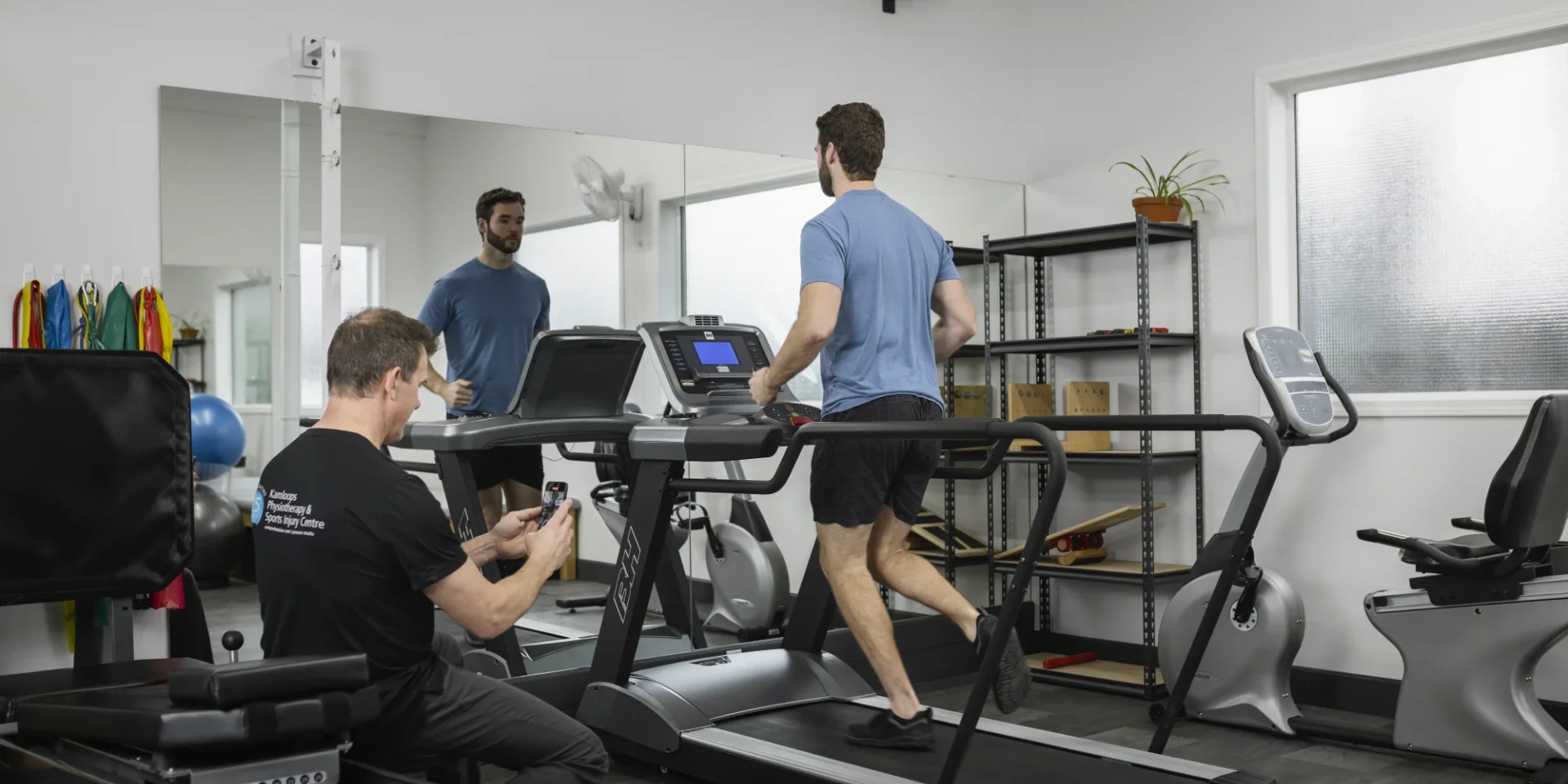
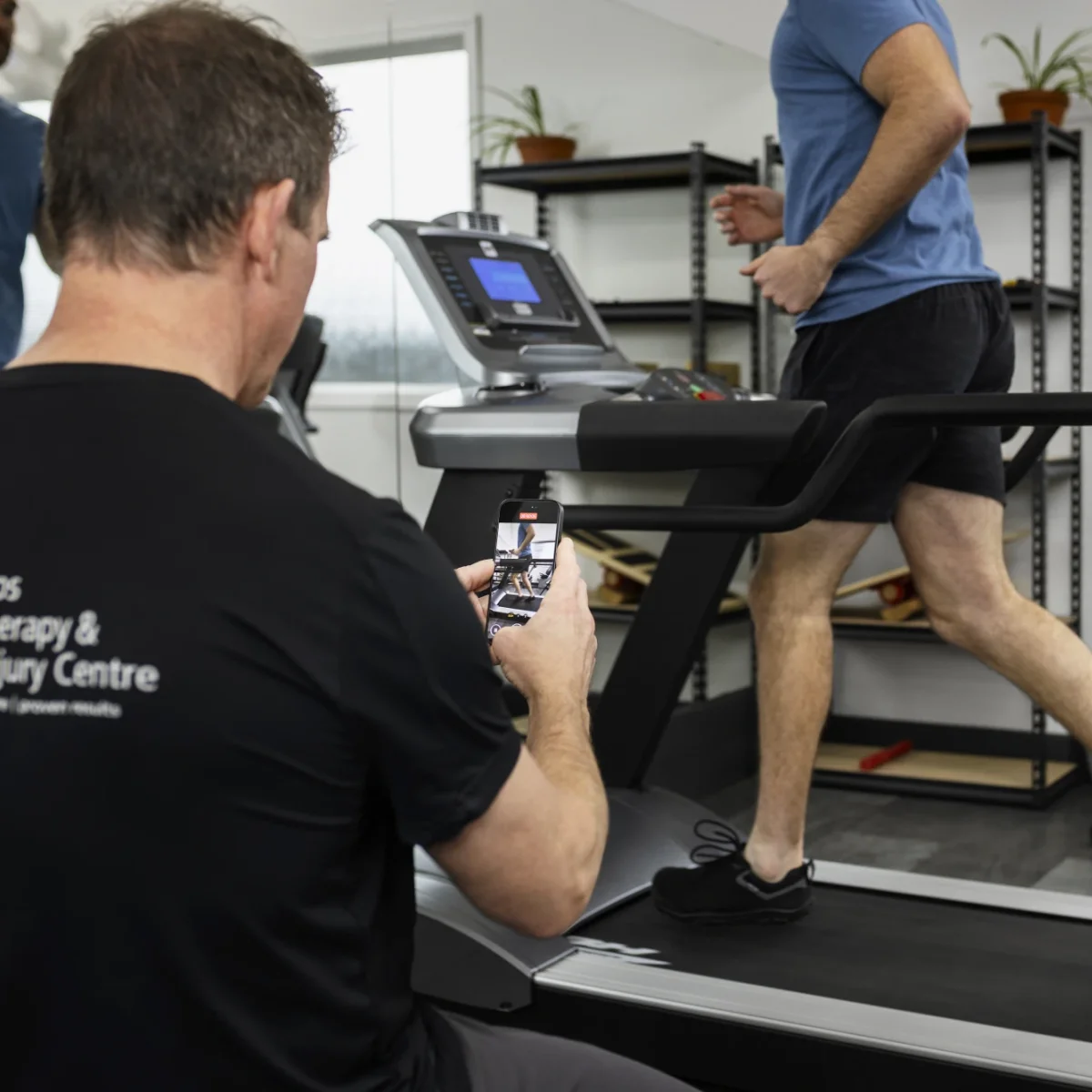
- running form using video gait analysis on a treadmill
What to expect
A running assessment is 60 minutes long. Come prepared to run on a treadmill, wearing comfortable clothing and the footwear you normally use for running.
Your physiotherapist will complete a physical assessment and, with your consent, record video of you running. They will review the slow-motion footage with you, explain what they are seeing, and consider it alongside your symptoms, training habits, injury history, and goals.
You will leave with recommendations based on your assessment. These may include targeted exercises, running cues or drills, changes to training volume or intensity, a gradual return-to-running plan, or treatment recommendations for a current injury.
A running assessment is not a replacement for coaching. It is intended to complement your training plan by helping you understand the physical and training-related factors that may be affecting your running.
Meet your team
The following 3 practitioners are here to help you with Running Assessment. Click on their names to read more about each practitioner’s background and education.