
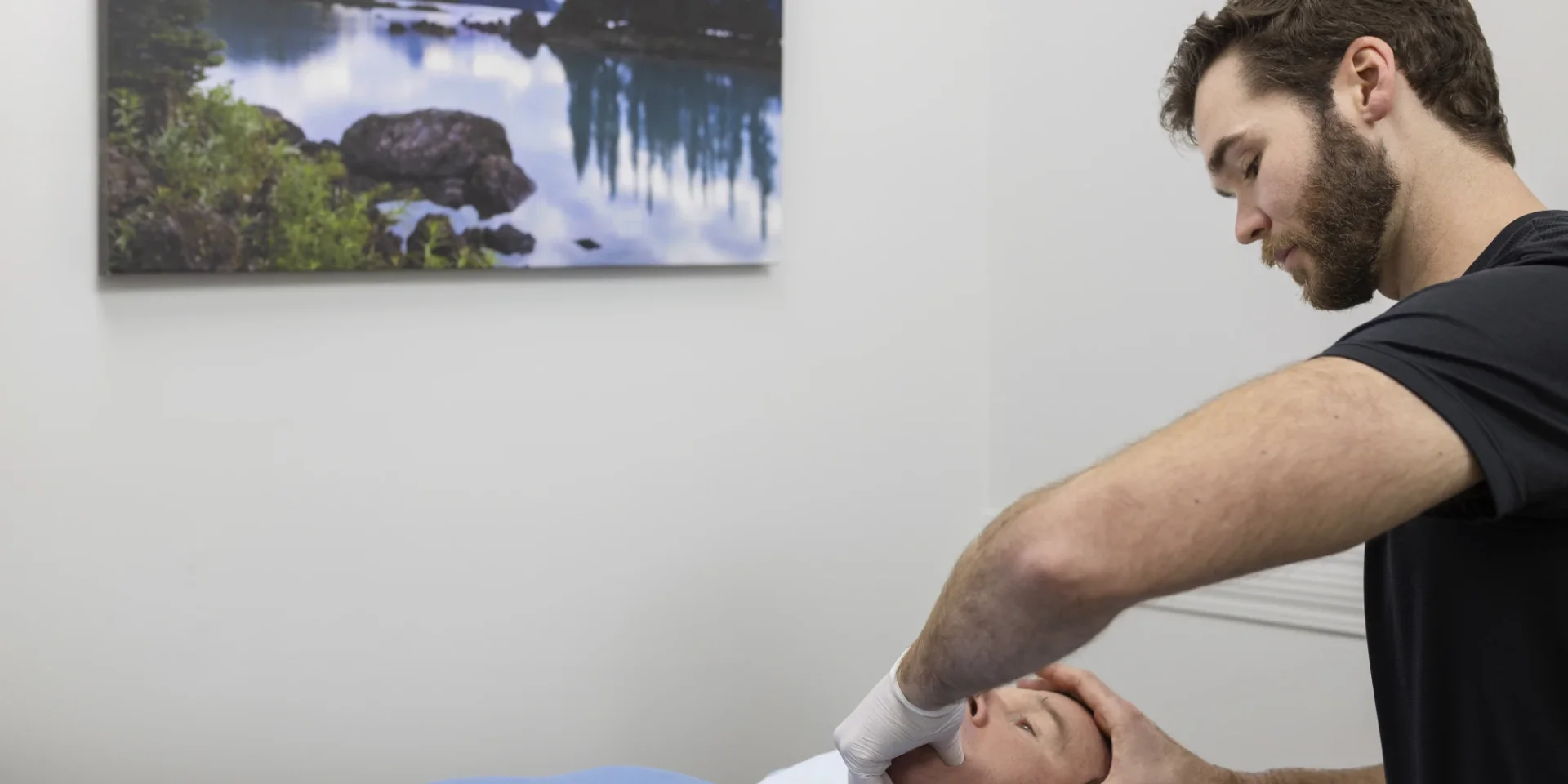
Temporomandibular Dysfunction (TMD)
TMD can contribute to jaw pain, clicking, headaches, facial tension, and difficulty opening, closing, or using your mouth comfortably.
Temporomandibular disorders (TMD) are a group of conditions affecting the jaw joints, the muscles used for chewing, or both. The joints themselves are called the temporomandibular joints, or TMJs, and are located on either side of your jaw.
TMD symptoms can affect chewing, talking, yawning, eating, singing, playing an instrument, and other activities that use the jaw.
As symptoms can also overlap with dental, ear, headache, or neck concerns, your assessment will focus on understanding what may be contributing in your particular case. Your therapist will explain what they are finding and whether physiotherapy or massage therapy is likely to help.
Who it’s for
Common symptoms of TMD may include:
pain in the jaw, face, or around the ear
jaw stiffness or reduced mobility
difficulty opening or closing your mouth
jaw locking
painful clicking, popping, or grinding
pain with chewing, talking, or yawning
headaches or neck pain associated with jaw symptoms
tension through the face, neck, shoulders, or upper back
ear discomfort, ringing, fullness, or dizziness occurring alongside jaw symptoms
Treatment may include
Treatment will depend on your assessment findings, symptoms, goals, and the type of practitioner you see. Physiotherapy and massage therapy may approach TMD care differently, but treatment may include:
- education about jaw position, habits, and symptom triggers
- manual therapy or massage for the jaw, face, neck, shoulders, or upper back
- exercises to improve jaw mobility, strength, control, or coordination
- neck and upper-back mobility or strengthening exercises
- posture and movement strategies
- relaxation or habit-awareness strategies when tension or clenching aggravates symptoms
- home strategies to support comfort and jaw function between visits
Depending on your practitioner’s training and the type of care you receive, treatment may also include acupuncture or dry needling.

What to expect
Your first visit will include a conversation about your symptoms, health and dental history, jaw habits, previous injuries, and the activities that affect your pain or mobility.
Your therapist may assess how your jaw opens and closes, its range and control, tenderness around the jaw and face, and how your neck, shoulders, and upper back move. They may also look at whether particular movements, positions, or muscle areas reproduce your symptoms.
Your therapist will explain what they are finding and whether physiotherapy, massage therapy, or another type of care may be appropriate. Treatment may begin during the first visit, and you may receive exercises, self-management strategies, or guidance about habits that could be aggravating your symptoms.
If your presentation suggests a dental concern or the possible need for an oral appliance, medical investigation, or specialist assessment, your therapist may recommend follow-up with a dentist, physician, or orofacial pain specialist. More complex joint concerns may require assessment by an oral and maxillofacial surgeon.
Meet your team
The following 6 practitioners are here to help you with Temporomandibular Dysfunction (TMD). Click on their names to read more about each practitioner’s background and education.