
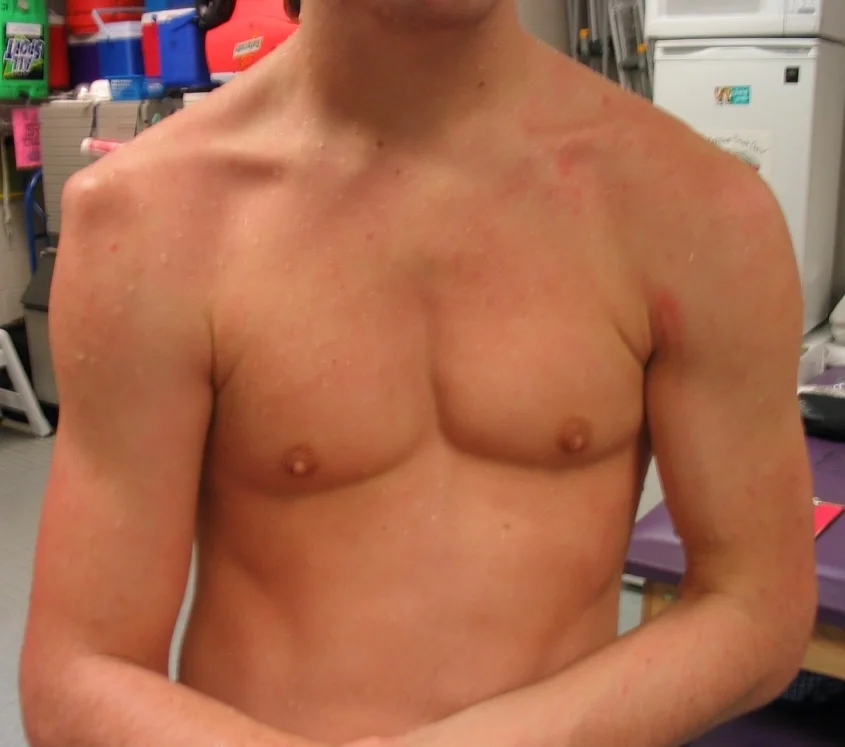
Understanding Shoulder Dislocations
In our latest post, we discussed sprains of the shoulder AC joint. Today we move to the glenohumeral (GH) joint (shoulder joint) and discuss a common injury we see as physiotherapists: Shoulder Dislocations. This post will highlight the shoulder joint anatomy, how dislocations occur, the most common types of dislocations, their associated symptoms, and generally how recovery/rehabilitation works.
Why the Shoulder Dislocates
The shoulder is the most mobile joint in the human body. Yet with increased mobility comes a lack of stability. The shoulder is a “ball-and-socket” joint consisting of 3 main components.
- A shallow socket, known as the Glenoid Fossa
- The ‘ball’, which we refer to as the Humeral Head
- The Soft-tissues (labrum, ligaments, joint capsule, and muscles)
If any of these 3 components become injured, instability can occur. This can lead to dislocations of the GH joint.
Shoulder Dislocations: Types and Causes
1. Anterior Dislocation (most common)
In an anterior dislocation the humeral head moves forward and downward out of the socket.
Often this is caused by a fall onto an outstretched arm, a forceful overhead motion (like in volleyball or throwing sports), or direct impact / trauma where the arm is forced backward behind the body while in an overhead position.
2. Posterior Dislocation (less common)
In this type of dislocation, the humeral head moves backwards out of the socket. These dislocations are often associated with seizures, electric shocks, or a fall forward onto the hand with the arm at shoulder level.
What Happens During a Dislocation?
When the humeral head slips out of the glenoid fossa, it can injure the labrum, joint capsule and/or rotator cuff muscles. In some cases, the humeral head can impact the edge of the glenoid causing a bony injury. Two of the most common injuries associated with anterior shoulder dislocations are a Hill-Sachs lesion (bony injury of the humeral head) and a Bankart lesion (labrum injury). We will be discussing these injuries further in our next post.
Symptoms of a Shoulder Dislocation
A dislocated shoulder is usually very obvious to the person experiencing it, though the severity of a dislocation can vary. Typically, an individual will experience significant shoulder pain with an inability to move the arm. They will usually have a visible deformity, with the shoulder looking ‘out of place’. Some individuals may have swelling, bruising, numbness or tingling down the arm, and/or muscle spasm around the joint.
Treatment and Recovery
Non-Surgical (Conservative) Treatment
The first thing that needs to be done after a dislocation is for the shoulder to be put back in place (reduced). Do not attempt to relocate the joint yourself – seek medical attention as they will reduce the shoulder and rule out any additional injuries. In some cases, the shoulder may spontaneously relocate but still feel unstable afterward. In this case, the individual should still seek medical attention to rule out bony fractures or other associated injuries such as rotator cuff tears.
Non-surgical treatments are appropriate for most first-time dislocations. These generally involve:
- A brief period of immobilization (in a sling)
- physical therapy focused on restoring range of motion, strength/stabilization and prevention of recurrent dislocations
Surgical Treatment
Surgical interventions are generally only performed on individuals who have suffered multiple dislocations, and those who have sustained labrum or bony injuries in conjunction with their shoulder dislocation(s). As mentioned above this will be discussed further in our next post.
Conclusion:
A shoulder dislocation is disruptive, painful, and if not managed properly, can lead to subsequent dislocations. With prompt medical care, structured rehabilitation, and (when needed) surgical intervention, the majority of individuals with shoulder dislocations return to full function. If you have had a recent shoulder dislocation, consult one of the physiotherapists at Kamloops Physiotherapy & Sports Injury Centre. They can guide you through a specific, individualized rehabilitation program that will improve your chances of a full recovery.
This blog post was written by physiotherapist Jacob Coelho. To book an appointment with Jacob or one of our other experienced therapists, call 250-314-0788.