
Calcaneal Bursitis
In our last post, we started a new mini-series on the topic of bursitis. We discussed what it is, associated symptoms, and the general treatment approach we take toward these injuries. Today we will begin exploring one of the areas that we as physiotherapists see bursitis – the calcaneus (heel bone).
What Is Calcaneal Bursitis?
Calcaneal bursitis occurs when one or more bursae near the calcaneus (heel bone) become inflamed and cause pain. There are two main types associated with the heel:
- Retrocalcaneal bursitis – inflammation of the bursa located between the Achilles tendon and the heel bone
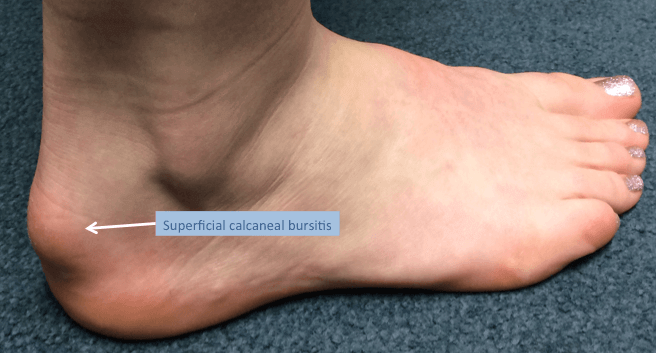
- Superficial calcaneal bursitis – inflammation of the bursa between the skin and the back of the heel
Common Causes of Calcaneal Bursitis
Calcaneal bursitis is often the result of repetitive stress or pressure on the heel. Therefore, athletes and individuals who spend long hours on their feet are particularly at risk.
Some common contributing factors could include:
- Wearing tight or poorly fitting shoes
- Overuse from activities such as walking/running, jumping or skating
- Sudden increases in physical activity or training intensity
- Abnormal foot mechanics, such as flat feet or high arches
- Tight calf muscles or Achilles tendon
- Direct trauma or repeated friction to the heel
- Inflammatory conditions like rheumatoid arthritis or gout
Symptoms of Calcaneal Bursitis
Symptoms of calcaneal bursitis typically vary based on the severity. Most individuals will describe localized pain at the back of the heel. It can also present with some visible swelling, and perhaps redness of the skin due to friction. The area can be quite tender to the touch and pain can worsen with activities like walking, running or wearing poor-fitting shoes.
Diagnosis of calcaneal bursitis is generally completed through a thorough history and physical examination. If there is obvious swelling at the back of the heel, bursitis is a likely culprit.
Treatment Options
Most cases of calcaneal bursitis respond well to conservative treatment. Typically, a combination of rest and activity modification, proper footwear, treatment modalities and anti-inflammatory medications may be used. As a physiotherapist, my goal is to address the root cause of the bursitis to prevent it from recurring.
Conclusion
Calcaneal bursitis may not be as well known as other forms of heel pain, but if you have persistent heel pain with visible swelling, this could be the cause of your discomfort. The physiotherapists at Kamloops Physiotherapy & Sports Injury Centre can guide you through a specific, individualised rehabilitation program that will improve your chances of a full recovery.
This blog post was written by physiotherapist Jacob Coelho. To book an appointment with Jacob or one of our other experienced therapists, call 250-314-0788 or book online HERE.