
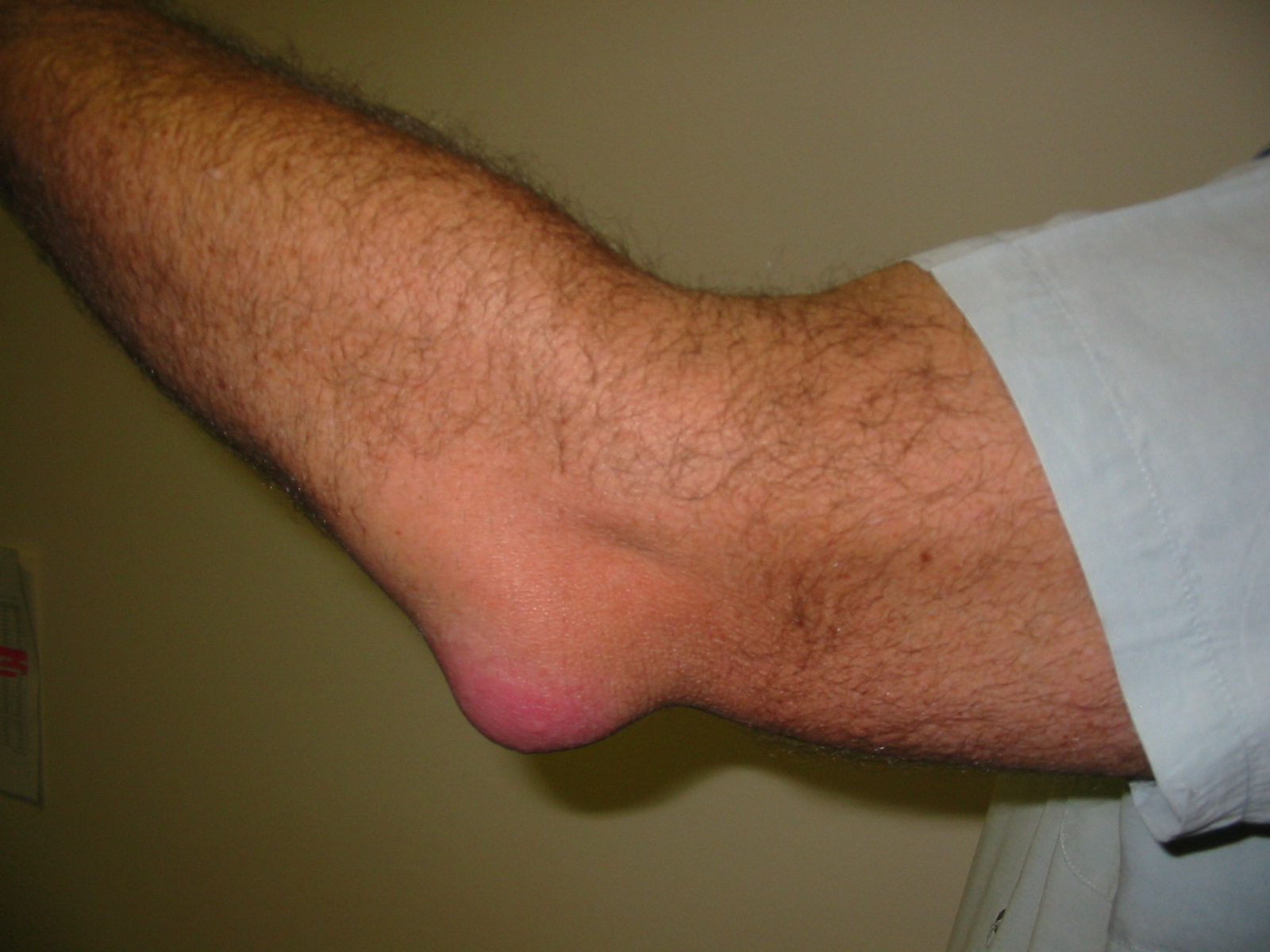
Olecranon Bursitis of the Elbow
Today we continue our look at bursitis of the upper extremity by focusing on the elbow. There is only one clinically significant bursa at the elbow, and it happens to be one of the most commonly irritated bursae in the body.
What Is Elbow Bursitis?
Elbow bursitis happens when the Olecranon bursa becomes inflamed. This bursa sits over the Olecranon, which is the bony prominence or ‘point’ at the back of your elbow. When inflamed, the bursa fills with excess fluid, causing swelling that may become visible on the back of the elbow.
Types of Elbow Bursitis
Elbow bursitis can occur in several different ways. Below are some of the more common causes of elbow bursitis that we see as physiotherapists.
1. Acute Traumatic Elbow Bursitis
Acute traumatic bursitis develops after a direct injury to the elbow, typically seen with falling onto the elbow, or hitting the point of your elbow on something hard. Often there can be immediate swelling, but swelling is not always visible or easily felt. Patients can describe limited mobility and sometimes pain when using the triceps muscle of the injured arm. Often the elbow is very tender to localized palpation at the tip of the elbow.
2. Chronic Microtraumatic Elbow Bursitis
This is the most common form of elbow bursitis and usually results from repeated pressure on the elbow over time, or from repetitive use of the triceps muscle. This can be seen in office workers, students or other individuals who may lean on their elbows frequently. It can also occur in weight-lifters or other individuals who perform forceful pushing movements on a regular basis. Swelling and pain in this case is often more gradual, and may not always be visible. Commonly this results in people describing a very ‘sharp’ pain when they touch a very specific point on their elbow against a firm surface. They may also experience pain with use of their triceps muscles, particularly when the elbow is quite bent.
3. Inflammatory Elbow Bursitis
Sometimes elbow bursitis develops as part of an underlying inflammatory condition such as Rheumatoid arthritis Psoriatic arthritis or Gout. In these cases, crystalline deposits or increased immune system activity can trigger inflammation within the bursa. Typical signs include joint stiffness, recurrent swelling and pain during flare-ups.
4. Septic Bursitis
An infection can occur in bursae anywhere in the body. Sometimes these seem to occur for no substantial reason, but can also be associated with a cut or skin abrasion in the region of a bursa. These often swell significantly and become reddened and hot to the touch. These can be serious, and should be treated immediately.
Common Symptoms
Although symptoms vary depending on how they originate, elbow bursitis often involves some visible or palpable swelling at the back of the elbow. This is often accompanied by pain with pushing motions or full bend of the elbow. Olecranon bursitis is often very tender to touch, or when resting your elbows on a hard surface.
In more severe cases where there is significant swelling, redness and elevated temperature, a physician should be consulted.
Treatment Options
Treatment depends on the underlying cause and severity of the bursitis. Elbow bursitis, like most other forms of bursitis, is typically managed conservatively. This is accomplished by rest, activity modification (especially avoiding pressure on the elbow), gentle range of motion exercises and modalities/medications to address the inflammation.
If symptoms persist, physicians may recommend injection of corticosteroid to reduce inflammation. Aspiration of fluid from a bursa is rare, and is generally reserved for those cases in which there is suspicion of an infection.
Generally, elbow bursitis can be avoided by reducing prolonged pressure on the elbow, using protective equipment during sports/manual labour, treating cuts/injuries to the elbow promptly and taking breaks from repetitive activities.
Conclusion
Elbow bursitis is a common condition that can range from mild swelling to painful infection. Understanding the different ways in which bursitis can occur helps with early recognition and treatment. With proper care and prevention strategies, most people recover fully without long-term consequences. If you believe you may have elbow bursitis, consult one of the physiotherapists at Kamloops Physiotherapy & Sports Injury Centre. They can guide you through a specific, individualised rehabilitation program that will improve your chances of a full recovery. This blog post was written by physiotherapist Jacob Coelho. To book an appointment with Jacob or one of our other experienced therapists, call 250-314-0788 or book online HERE.